Pomegranates
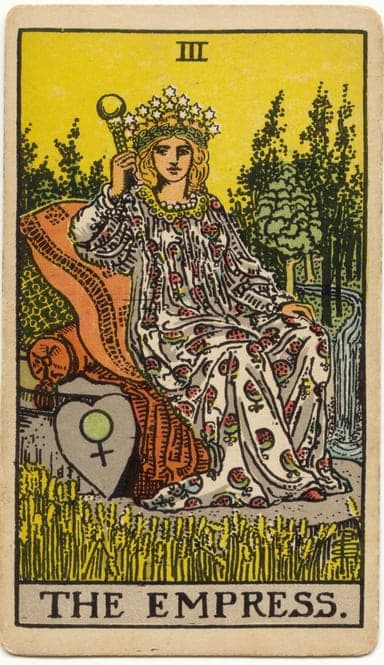
Pomegranates hang on the High Priestess’s veil and print the Empress’s gown. The fruit carved on the temple pillars and sewn on the high priest’s robe, it is also the fruit that kept Persephone in the underworld.
In the tradition
In the Bible, pomegranates were carved in rows on the capitals of the temple pillars and embroidered on the hem of the high priest’s robe, alternating with golden bells. The many-seeded fruit was an old sign of plenty across the Mediterranean.
The Greek line runs differently. In the Homeric Hymn to Demeter, Hades gives Persephone a few pomegranate seeds before she leaves him, and because she has eaten in the underworld she must return there for part of every year.
In the cards
Waite mentions the veil "embroidered with palms and pomegranates" behind the High Priestess without explaining it, and lets the Temple setting speak. On the Empress the fruit moves from the veil to her dress.
Sources
- A. E. Waite, The Pictorial Key to the Tarot (1910). Waite's own guide to the deck he designed with Pamela Colman Smith, with each card's divinatory meanings.
- Various, The Bible (King James Version 1611; the Latin Vulgate, 4th century). The source of much of the Temple, Eden and Revelation imagery in the Rider-Waite-Smith deck.
- Anonymous, Homeric Hymn to Demeter (7th or 6th century BCE). The oldest telling of Persephone and the pomegranate seeds.
Updated October 9, 2026.
See it in your own profile
Caelumia reads your whole birth chart and your numbers together, and shows where they agree. Your profile is free to start, and your first results appear while you answer.