The sphinxes
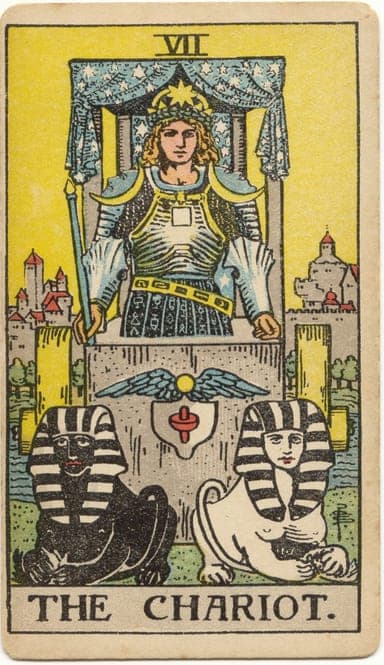
A black sphinx and a white one draw the Chariot. Waite says that he took them from Éliphas Lévi, in place of the horses of older decks.
In the tradition
The French occultist Éliphas Lévi described the Chariot drawn by two sphinxes, one white and one black, in his Dogme et Rituel of the 1850s. Waite wrote that he had "accepted the variation of Éliphas Lévi". The colors pull opposite ways, and the charioteer holds no reins.
The sphinx itself came to Europe from Egypt by way of Greece, where the Sphinx of Thebes set a riddle and destroyed those who failed it. For 19th-century occultists it stood for a mystery to be answered.
In the cards
On the Wheel of Fortune a single sphinx sits on top of the turning wheel, holding a sword. Waite calls it the equilibrium in the wheel’s motion.
Sources
- A. E. Waite, The Pictorial Key to the Tarot (1910). Waite's own guide to the deck he designed with Pamela Colman Smith, with each card's divinatory meanings.
- Éliphas Lévi, Dogme et Rituel de la Haute Magie (1854 to 1856). The French occultist whose readings of the trumps Waite often followed or argued with.
Updated October 9, 2026.
See it in your own profile
Caelumia reads your whole birth chart and your numbers together, and shows where they agree. Your profile is free to start, and your first results appear while you answer.